A hackathon can help a university application, but only if the student can show what they did and what they learned. A certificate on its own says you turned up. A clear account of the problem you tackled, your role in the team and the working project you built says a lot more.
We run Code Battle, the UAE’s inter-school hackathon, and it’s a fair question for parents of Grade 9 to 12 students. We can’t speak for any admissions office, and every university and country weighs applications differently. What we can do is explain what a hackathon involves, and how students in the UAE can describe it so it’s worth the space on the form.
What extracurricular activities look good for university applications?
When families in the UAE ask about extracurricular activities for university applications, the honest answer is that there isn’t a magic list. In general, activities carry more weight when a student can point to three things: they kept at it over time, they took some responsibility, and there’s something to show for it.
| Type of activity | What it can show | Evidence worth keeping |
|---|---|---|
| Competitions and hackathons | Working under a deadline, teamwork, applying skills to a new problem | Certificate, results page, screenshots, the project itself |
| Clubs and societies | Commitment over a year or more, leadership if you run it | Role, what the club did, a teacher who can describe it |
| Personal projects | Curiosity and independence | Code, a short demo video, notes on what you’d improve |
| Volunteering | Responsibility and care for others | Hours, the organisation, what you actually did |
Check each university’s own admissions guidance for what it asks for and how it wants activities described. That’s the only reliable source.
Do hackathons actually help with university applications?
They can, especially for students applying for computer science, engineering, design or business courses, where a hackathon is directly related to the subject. But one hackathon is a single line. It becomes more useful when it’s part of a pattern.
A few things make a hackathon stronger on paper:
- Coming back. A student who competed in the Captain division in Grade 7 and again in Colonel in Grade 10 has a story of growth, not a one-off.
- Taking a clear role. Builder, designer or presenter. Saying exactly what you did beats “we built an app”.
- Continuing afterwards. Improving the project after the event, and saying honestly what was built on the day and what came later.
- Linking it to your subject. One sentence on why this kind of problem interests you.
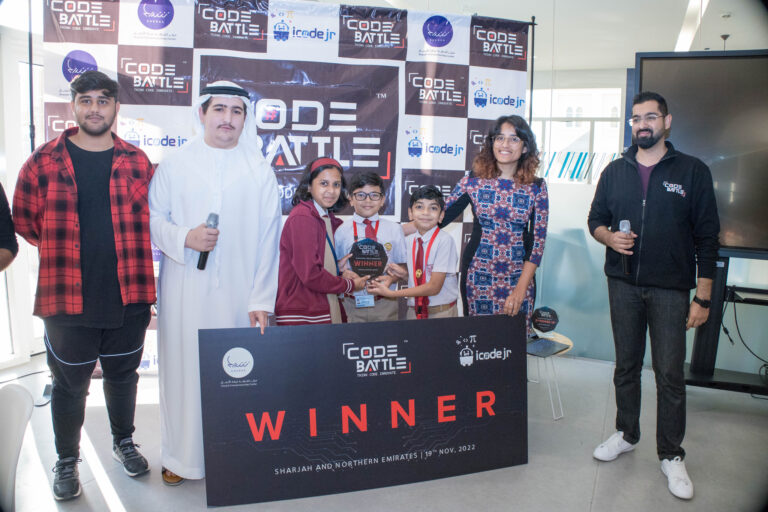
Winning helps, of course. It isn’t the whole picture. Placing third in a two-hour build is good news; being able to explain what you’d change about your project is often more interesting to a reader.
What does a school hackathon involve, so you can describe it accurately?
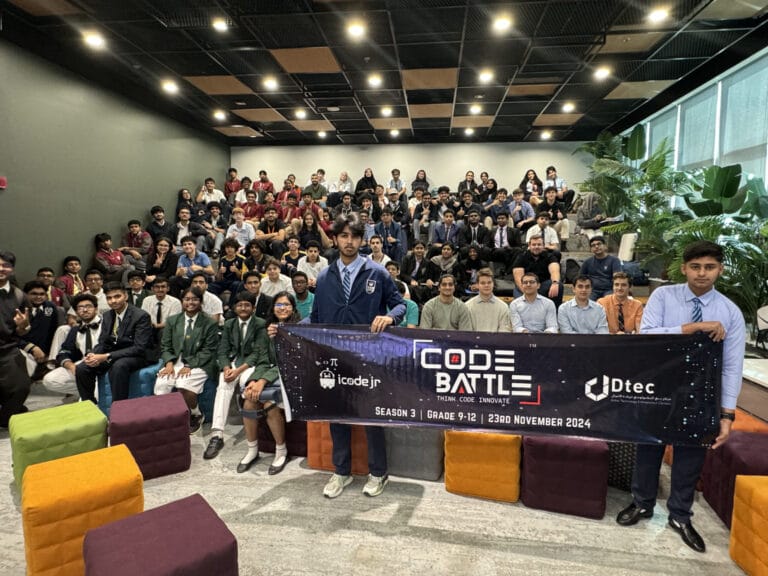
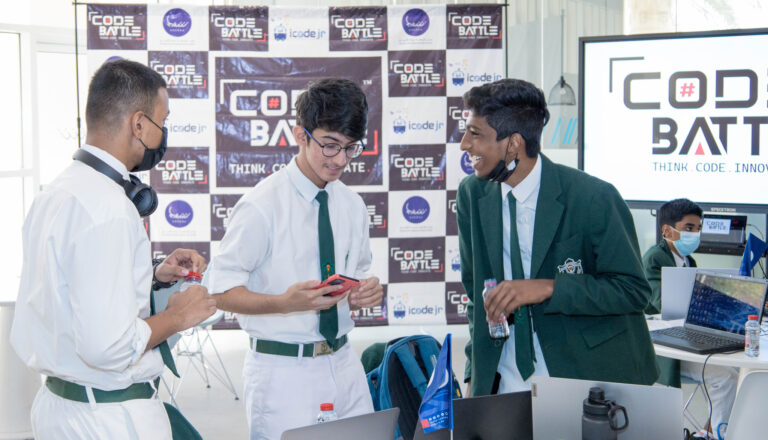
Readers may not know what a school hackathon is, so give them the context in a few words. At Code Battle, the format is:
- Teams of two or three students from the same school, in grade-based divisions. Grades 9 to 12 compete in the Colonel division, using any language or platform.
- A theme revealed on the morning of the event, with recent Colonel themes including “AI for Social Good” and “Cybersecurity Challenge”.
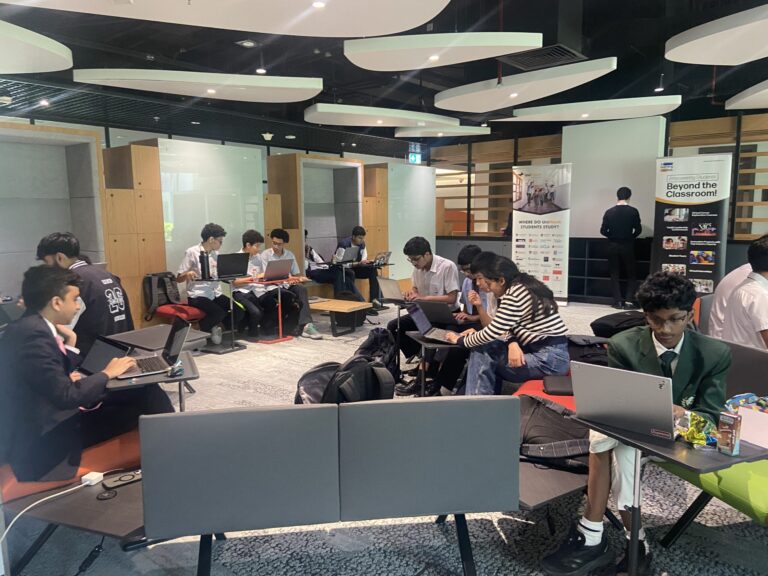
- A two-hour build window, with the project built entirely on-site.
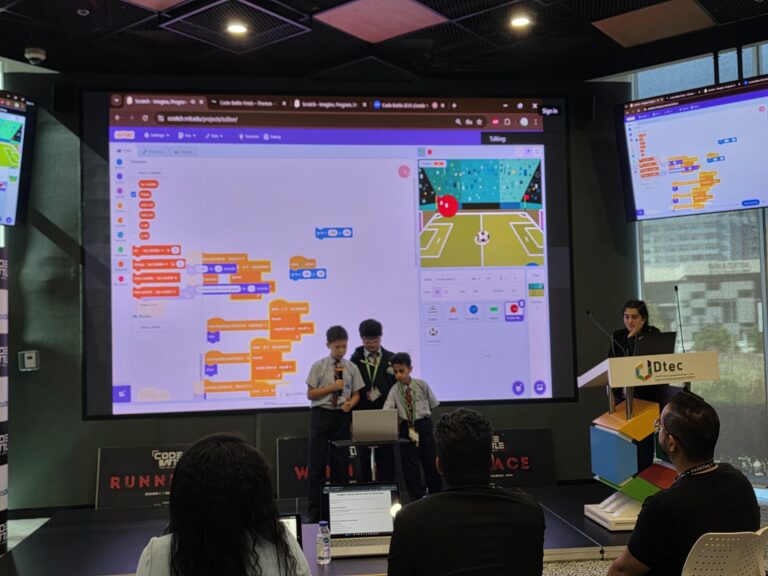
- A 2 to 3 minute pitch with a live demo, followed by questions from judges who are industry professionals and academics.
- Scoring across code, user interface, creativity, teamwork and presentation.
That’s enough detail to show it wasn’t a casual afternoon. You don’t need all of it, just the parts that support your point. Our general guide to what a hackathon is has more background if you need it.
How do you write about a hackathon in a personal statement?
Treat it as evidence for a point you’re making about yourself, not as a list of achievements. A simple structure works:
- The situation: the event, the theme and the time limit, in one sentence.
- Your part: what you were responsible for in the team.
- The problem: one specific thing that went wrong or was hard, and how you dealt with it.
- What it taught you: something you now understand about your subject or about how you work.
Compare these two openings, using placeholders rather than a real student’s story:
- Weaker: “I took part in Code Battle and received a certificate.”
- Stronger: “At Code Battle, my team had two hours to build something on the theme [theme]. I was responsible for [your role], and when [specific problem] happened forty minutes before the deadline, I [what you did]. It taught me [what you learned].”
The second version only works if every bracket is filled with something true. Don’t inflate your role. “I led the team” is easy to write; specific detail is far more convincing.
Describing it in an activities list or CV
Where you only have a line or two, lead with your role and the outcome. Something like “Colonel division team member, Code Battle [year]: built a [type of project] in a two-hour hackathon; [placement, if any].” Keep the language plain.
What if you used AI during the hackathon?
Say so, and say how. Code Battle allows AI tools as long as students can explain how they used them, and any recycled code has to be disclosed. The same honesty belongs on an application. Being able to explain what the AI did and what you decided yourself is a strength, not something to hide.
How should you build a portfolio from a hackathon?
Collect the evidence on the day or straight after, while it’s fresh. A week later, half of it will be gone.
- Save the project files and, for text-based projects, put the code in a public repository with a short README.
- Take screenshots during the event and record a one-minute demo afterwards.
- Write down what you built on the day and what you changed later, so you can describe both honestly.
- Keep your certificate. Every Code Battle participant receives one.
- Link to the results where they exist, such as the Code Battle 2025 rankings.
- Ask the teacher who accompanied your team whether they’d be willing to mention it in a reference.
Teachers see more than the final pitch. A teacher who brought a team to our Sharjah chapter told us:
What stood out to me about Code Battle was how it encouraged students to think critically and solve problems independently. The experience challenged them to apply what they had learned in a meaningful and enjoyable way.
— Avikkal Kavitha, Teacher, GEMS Millennium School, Sharjah
Which competitions can Grade 9 to 12 students look at in the UAE?
Code Battle’s Colonel division is one option, and it’s free for schools and students. Others include the UAE Hackathon Rising Stars track for ages 11 to 17, the Curtin STEM Challenge at Curtin University Dubai for Grade 9 and above, the AUS School Computing Competition at the American University of Sharjah for Grades 10 to 12, and NASA Space Apps Challenge events in the UAE. Dates and eligibility change, so check each organiser’s site.
We’ve compared them in our guides to student coding and STEM competitions in the UAE and hackathons in the UAE for school students. When you’re ready, schools can enter Code Battle teams through the school registration form. Dates for the next season are posted on upcoming events.
Frequently asked questions
Do hackathons look good on university applications?
They can, especially for subjects such as computer science or engineering. They help most when you can describe your role, what you built and what you learned, and when they’re part of a wider pattern of interest.
How do I write about a hackathon in a personal statement?
Use it as evidence for a point about yourself. Briefly set the scene, explain your role, describe one real problem you solved and say what it taught you.
Should I mention a hackathon if my team didn’t win?
Yes, if you have something specific to say about it. What you built and learned usually matters more than the placing.
Which extracurricular activities are good for university applications in the UAE?
Activities you’ve kept up over time, where you took responsibility and have something to show. Check each university’s own guidance for what it asks for.