AI competitions for school students in the UAE come in two kinds: events built around AI, such as InnovAIte, a high-school AI hackathon, and general coding hackathons where AI projects are welcome, such as Code Battle. Code Battle runs divisions from Grade 1 to Grade 12, held an AI and machine learning edition in 2024, and has used ‘AI for Social Good’ as a theme for its oldest division.
We organise Code Battle, so this guide is strongest on what we’ve seen there. For other events we only share what the organisers publish. Dates change every year, so check the organiser’s site for current dates.
What AI competitions exist for school students in the UAE?
Here are the options we know about, and where AI fits into each.
| Event | Who it’s for | Where AI fits | Timing |
|---|---|---|---|
| InnovAIte | High-school students | A hackathon focused on AI | 2026 edition held in January; check the organiser’s site for the next one |
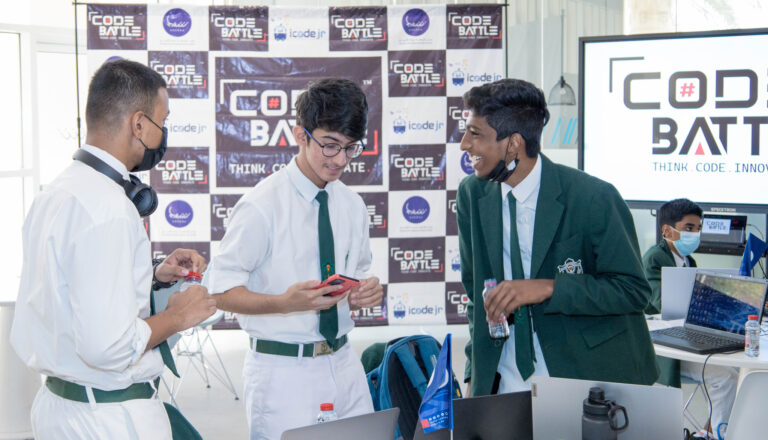
| Code Battle | Grades 1–12, teams of 2–3 | AI tools allowed with explanation; ‘AI for Social Good’ used as a Colonel theme; 2024 was the AI & machine learning edition | Season 6 dates not yet announced |
| UAE Hackathon: Rising Stars | Ages 11–17 | National hackathon run by the TDRA; check hackathon.ae for this year’s challenges | 2026 Track 2: 19–29 Oct |
| Hour of AI (CS Education Week) | Classes and clubs | Not a competition. The Hour of Code is becoming the Hour of AI | 7–13 Dec 2026 |
Rising Stars details, including how to enter, are on hackathon.ae. For a wider list that includes robotics and STEM events, see our 2026–27 guide to student competitions in the UAE.
What counts as an AI project at a school competition?
Two very different things get called “AI” at student events. It helps to know which one you’re doing.
Building something that uses AI
Here the project itself contains AI: an app that recognises pictures of plants, a chatbot that answers questions about recycling, a tool that sorts messages by mood. The AI is part of what the user sees and uses.
Using AI to help you build
Here the team uses an assistant such as ChatGPT to suggest code, explain an error or draft some text. The finished project might not contain any AI at all.
Both are allowed at Code Battle. What matters is that the team can explain what the AI did and what they did themselves. We go through the rules in detail in our guide to using ChatGPT in a hackathon.
How has AI shown up at Code Battle?
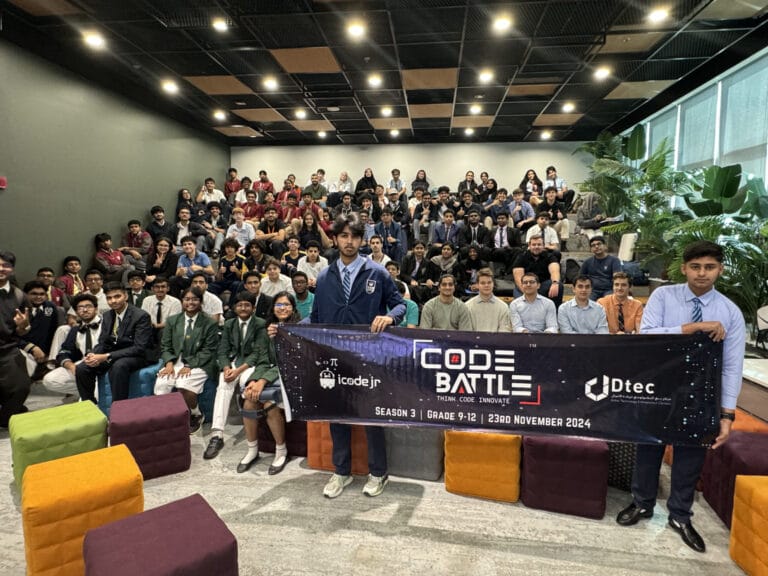
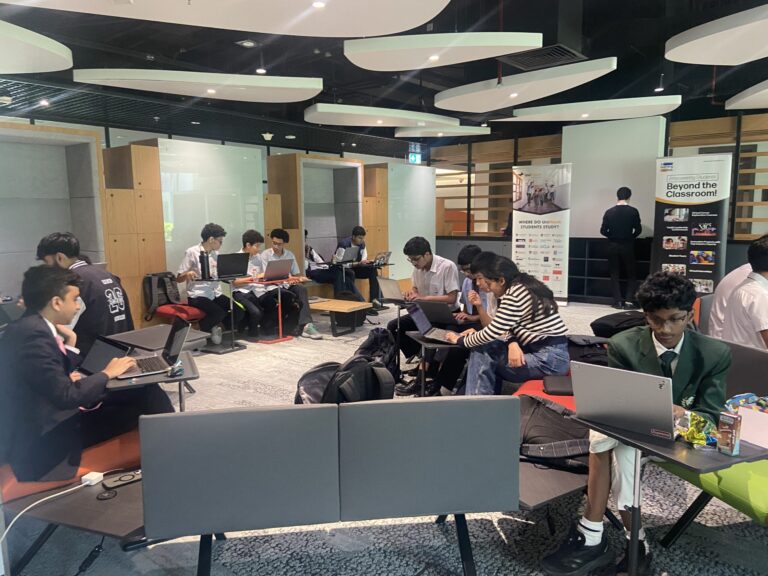
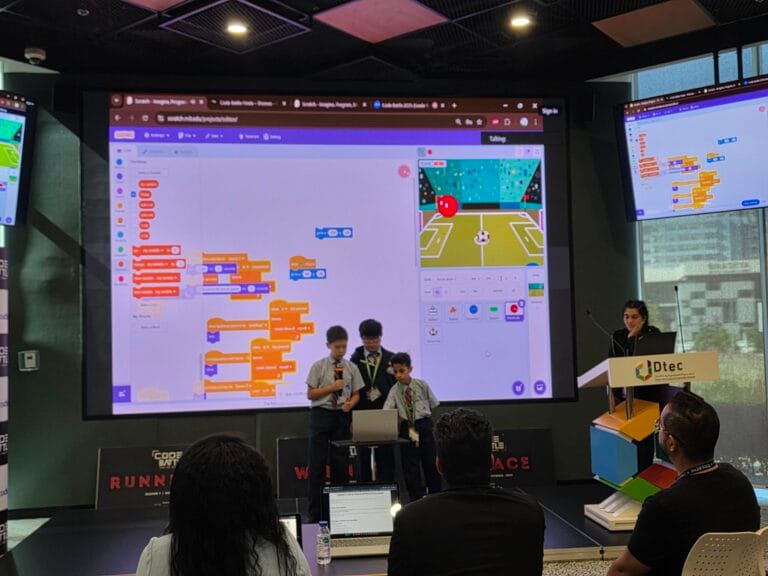
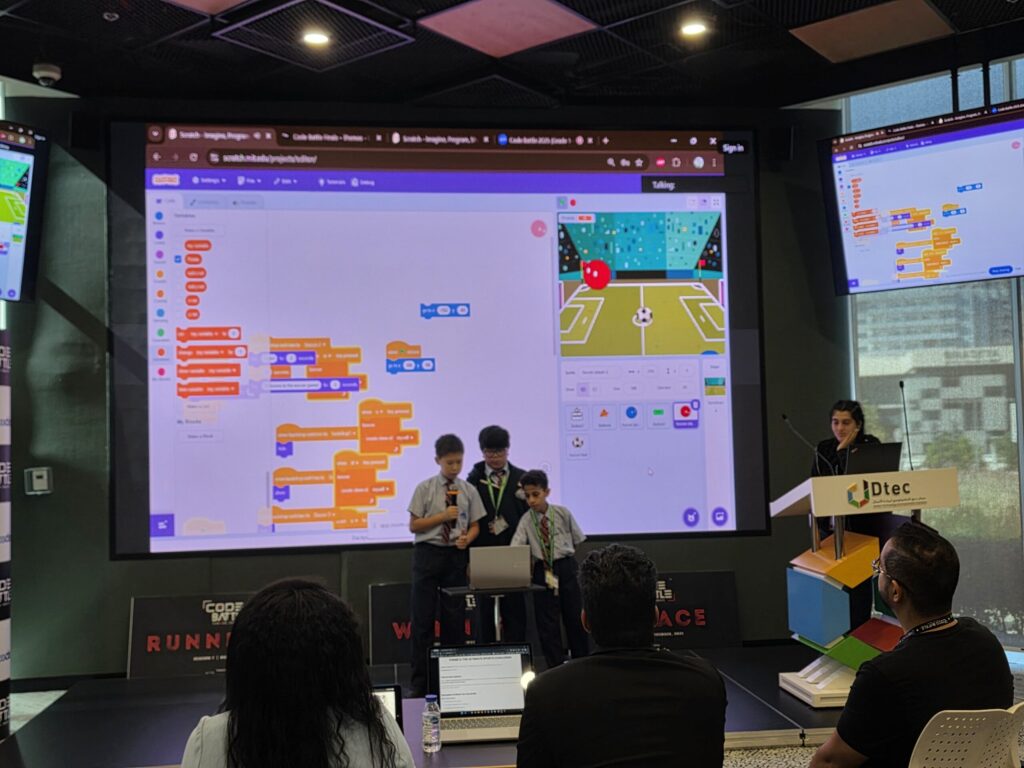
Season 4, in November 2024, was our AI and machine learning edition. It ran on 16, 17 and 23 November at Dtec in Dubai, with more than 450 students from five emirates and six judges. There’s more on the Code Battle 2024 page.
‘AI for Social Good’ is one of the themes we’ve used for the Colonel division (Grades 9–12). It asks teams to point AI at a real problem for real people. In two hours, that means a narrow, believable idea: a tool that helps one group of people with one task, rather than a platform that fixes a whole city.
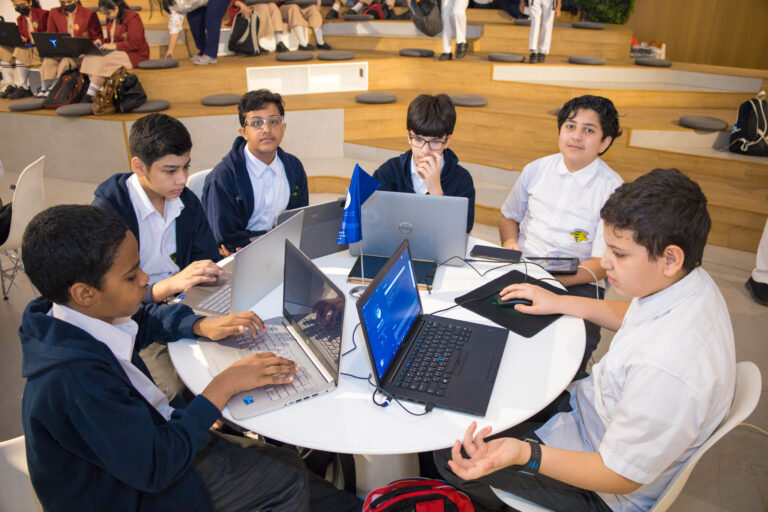
The same rules apply in every division. Projects must be built entirely on-site. AI tools are allowed, but students must be able to explain how they used them. Any recycled code must be disclosed.
How should students prepare for an AI competition?
Start with what the student can already build, then add one AI idea on top. A working project with a small AI feature beats a brilliant AI idea with nothing working.
Grades 1–4
Keep it about ideas, not tools. Talk about how a computer might learn to tell a cat from a dog by looking at lots of pictures. Free browser tools such as Google’s Teachable Machine let children train a simple image or sound model and watch it get things right and wrong. At Code Battle, Cadet teams build in block-based tools such as Scratch, so the project itself stays simple.
Grades 5–8
Captain teams can work in blocks or text. A good practice project is a rule-based chatbot: plenty of if-then logic that answers a handful of questions. Once it works, ask what would change if the bot learned from examples instead of fixed rules. That conversation is half of what judges want to hear.
Grades 9–12
Colonel teams can use any language or platform. Get comfortable with Python basics, loading a small dataset and calling an AI tool from your own code. Then practise saying, in plain words, what the model does, where its data comes from and where it fails.
A four-week practice plan
- Week 1: build a small project with no AI, against a two-hour timer.
- Week 2: add one AI feature, then write down how it works in three sentences.
- Week 3: run a full rehearsal: a surprise theme, two hours, then a two-minute pitch.
- Week 4: practise answering judges’ questions out loud, with a parent or teacher playing judge.
What do judges look for in an AI project?
The same things they look for in any project. At Code Battle, judges score code, user interface, creativity, teamwork and presentation. AI isn’t a scoring category of its own. It shows up in how well the project works, how original the idea is and how clearly the team explains it.
Expect questions like these:
- What does the AI part actually do?
- Where did the data or the model come from?
- What happens when it gets something wrong?
- Which parts did you build yourselves?
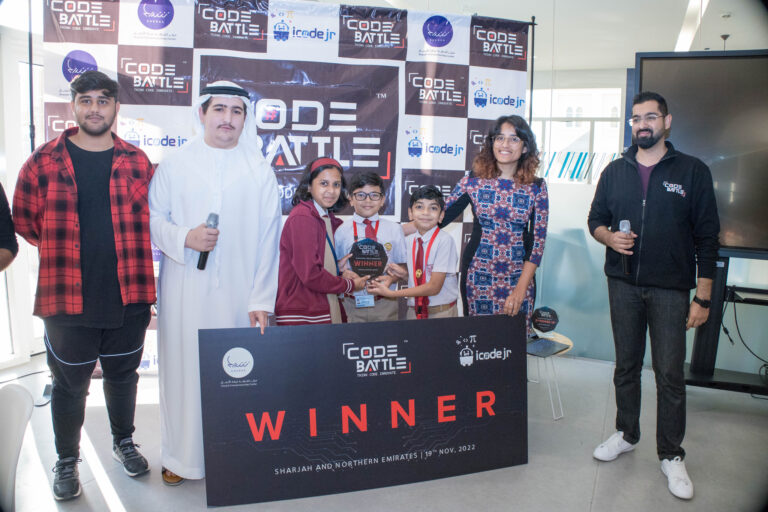
Teams that can answer those calmly come across well. Teams that can only say “the AI did it” have a much harder time in front of a judge. A teacher who brought a team to our 2022 Sharjah & Northern Emirates chapter described what they valued in the day:
Code Battle gave students a great platform to showcase their skills and build confidence in their abilities. Seeing them take on challenges, experiment with ideas, and learn along the way was incredibly rewarding.
— Biya James, Teacher, Leaders Private School
Which AI competition should a student start with?
For Grades 1–8, we’d start with a general hackathon where AI is allowed but not required. Code Battle’s Cadet and Captain divisions give students a full competition day without the pressure of an AI-only brief.
High-school students who already code can look at InnovAIte and the Rising Stars track (up to age 17), alongside Code Battle’s Colonel division. Short of ideas? Our list of hackathon project ideas by grade is a good place to start.
Dates for the next season are posted on upcoming events. Schools can register interest through the school registration form, and dates will appear on upcoming events.
Frequently asked questions
Are there AI competitions for school students in the UAE?
Yes. InnovAIte is a hackathon focused on AI for high-school students, and general hackathons such as Code Battle welcome AI projects. Check each organiser’s site for current dates.
Can students use ChatGPT at Code Battle?
Yes. AI tools are allowed as long as students can explain how they used them. Projects must be built on-site, and any recycled code must be disclosed.
What age can students start AI competitions?
Code Battle’s divisions start at Grade 1, and the same AI rules apply in every division. Younger students do best keeping AI to one simple idea they can explain.
Do students need Python for an AI competition?
Not at Code Battle. Cadet teams use block-based tools, Captain teams can use blocks or text, and Colonel teams can use any language or platform.
Was there an AI edition of Code Battle?
Yes. Season 4, in November 2024, was the AI and machine learning edition. It was held at Dtec in Dubai with more than 450 students from five emirates.