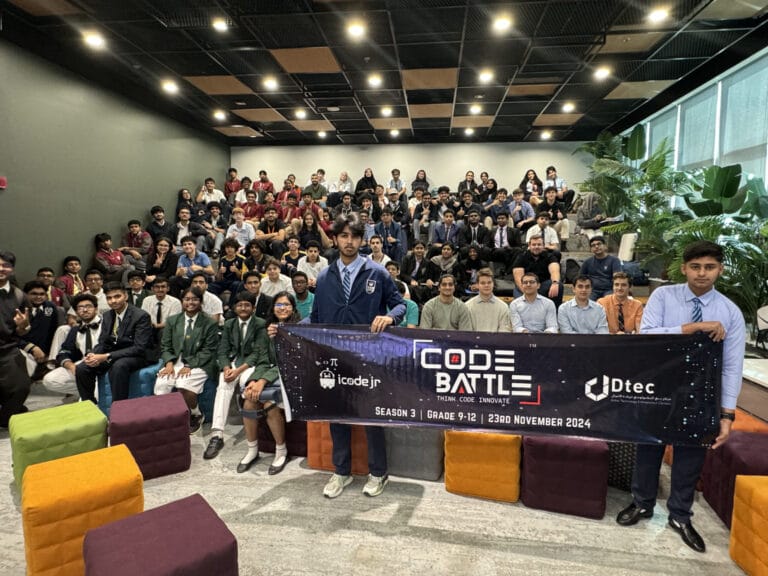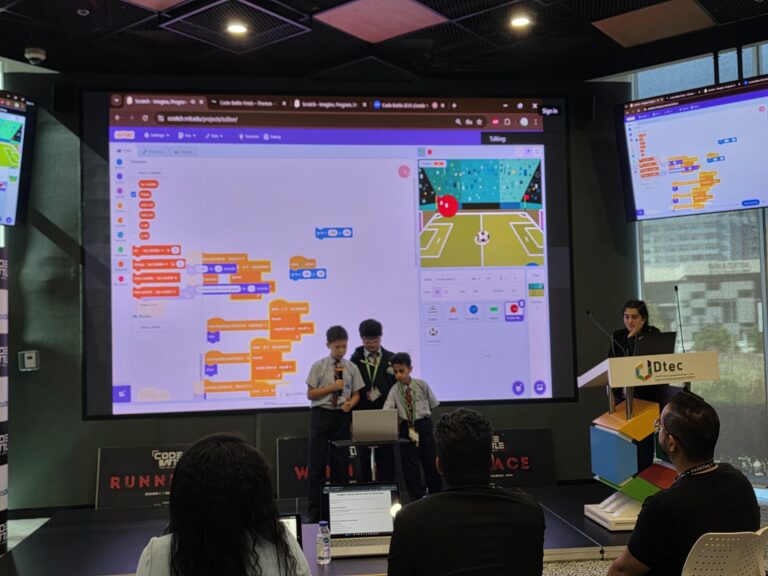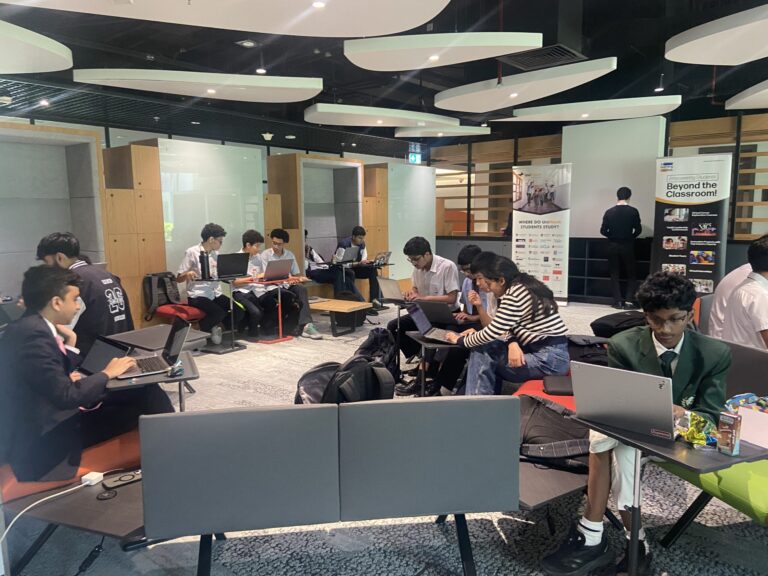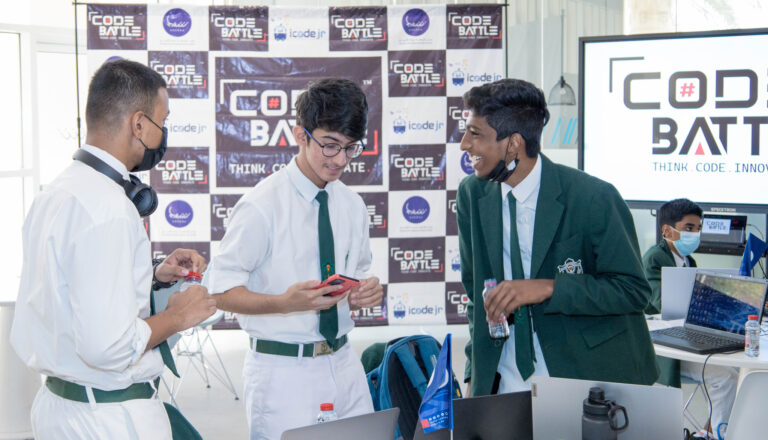
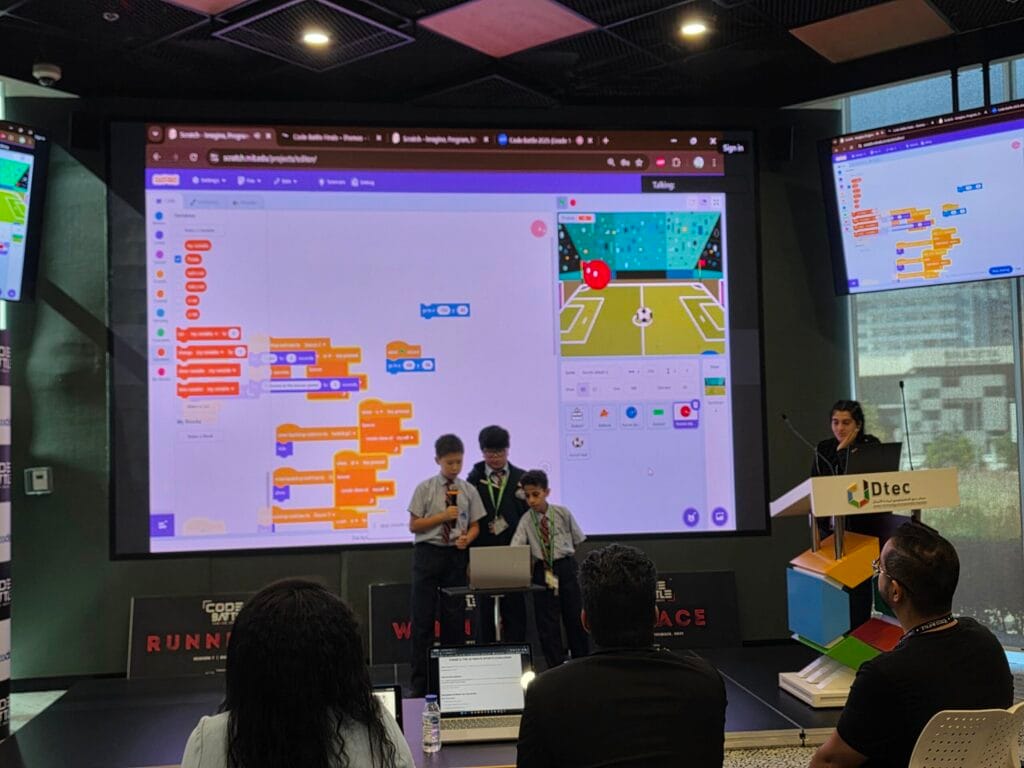
To organise a hackathon, set a clear goal, choose a format, write the challenge and rules, line up judges and mentors, promote it, run the event and follow up on the results. This guide walks through each step for schools, companies, government bodies and universities in the UAE, whether you are planning a two-hour sprint or a national competition. It draws on what we have learned running Code Battle since 2021. If you would rather hand the work over, our Hackathon as a Service team can run it for you.
How to organise a hackathon in 9 steps
1. Set a clear goal
Start by deciding what the hackathon is for. Common goals are innovation, learning, hiring, community building and CSR impact. Each one leads to a different event: a hiring hackathon needs a technical challenge, while a CSR event needs a story you can share afterwards.
Agree how you will measure success before you plan anything else. Useful measures include participation, completed projects, follow-through on winning ideas and media reach.
2. Choose your format
There is no single right format. Work through these four decisions, then mix the options to suit your audience.
| Decision | Options | Works well when |
|---|---|---|
| Setting | In person, online or hybrid | In person builds energy. Online removes travel and widens reach. Hybrid gives you both, with remote building and an on-site final. |
| Participants | Individuals, teams or both | Teams suit collaboration goals. Individual events are simpler to run and show each person’s skills. |
| Length | Two hours, one day, or 24 to 48 hours | Short sprints fit younger students or a slot in a wider event. Longer formats suit older students and professionals. |
| Structure | One event or several rounds | Eliminators or regional rounds let you take in large numbers and finish with a smaller final. |
Two examples from our own events show how different these choices can be. Code Battle 2026 uses an online eliminator for teams, followed by an in-person Grand Finale. CodeNova, which we ran at the Sharjah Entrepreneurship Festival in 2022, was an in-person individual hackathon with a two-hour coding window.
3. Set the budget and date
Build your budget from the main cost lines: venue, tech, food, prizes, judges and mentors, promotion, and photo and video. The format has the biggest effect on all of them, so settle that first.
When you pick a date in the UAE, check it against exam periods, school holidays and Ramadan, along with any major events your audience will already be attending.
4. Write the challenge and rules
A good challenge is open enough for different ideas but specific enough to judge fairly. Decide whether themes will be revealed on the day or shared in advance, then write rules that cover:
- Who can enter, and how age groups or categories work
- Team size, if it is a team event
- Which coding tools and platforms are allowed
- Whether participants can use AI tools, and how (see our guide to using ChatGPT and AI in hackathons)
- What must be original work, and what can be prepared in advance
- How and when to submit, including the exact deadline
- Who owns the projects after the event
- A code of conduct
5. Line up judges, mentors and a scoring rubric
Publish your scoring rubric before the event so everyone knows what counts. Choose criteria that match your goal, and brief judges on them so scores are consistent. Our guide to hackathon judging criteria explains how this works in practice.
Invite judges from outside the organising team, and give mentors a clear role. They should help participants get unstuck, not build the project for them.
6. Sort out the venue and tech
For an in-person event, test the Wi-Fi with the full number of people connected, count power sockets and decide who brings devices. Have a backup plan for the moment the internet drops.
For any event, plan for the language your participants work in, and prepare briefings and materials to match. If participants are under 18, sort out parental consent, supervision and photo permissions early.
7. Promote it and open registration
Create one landing page with the dates, format, rules and a sign-up link. Send invitations through the channels your audience already uses, then follow up with reminders as the deadline approaches. Brief everyone who registers so they arrive knowing what to expect.
8. Run the event
Write a run-of-show that says what happens when and who is responsible. Here is a simple example for a one-day in-person event:
| Stage | What happens |
|---|---|
| Opening | Welcome, rules and theme reveal |
| Build | Participants work, with mentors circulating and tech support on hand |
| Final checks | Reminder of the deadline, then projects are submitted |
| Presentations | Short pitches and live demos to the judges |
| Awards | Winners announced, certificates and photos |
Give someone the job of keeping time, and keep the host, judges and tech support in touch throughout the day.
9. Follow up
Announce the winners, share certificates, photos and video, and thank your judges, mentors and sponsors. Then put together a short report for your stakeholders covering participation, outcomes and highlights, measured against the goal you set in step 1.
How long does it take to organise a hackathon?
It depends on the size of the event. If you are doing it yourself for the first time, eight weeks is comfortable for a single-school event. Larger, multi-day and public events need more time for venues, judges and promotion.
An experienced organiser can move much faster because the process is already in place. iCodejr can organise a hackathon from as little as 3 days’ notice, depending on the size of the event.
How do you organise an online or hybrid hackathon?
The nine steps above still apply, but a few things change when participants are not in the same room:
- Launch: reveal the theme at a set time for everyone, for example at a live webinar.
- Deadline: give an exact date and time, and make the submission process simple.
- Support: set up one clear channel where participants can ask questions and get help.
- Fairness: decide how you will check that work is original, and say so in the rules.
- Final: for a hybrid event, shortlist the best entries and bring them together for a live final.
Code Battle 2026 follows this model. Themes are revealed at a launch webinar, teams build and submit online, and the top teams go on to an in-person Grand Finale at Heriot-Watt University Dubai.
What should you plan differently for each audience?
| Audience | What to focus on |
|---|---|
| Schools | Age groups, block or text-based coding, parental consent and fitting around the school calendar |
| Companies | A challenge tied to a real business goal, time away from day-to-day work, and what happens to winning ideas |
| Government and free zones | Public registration, stakeholder reporting and a clear link to your wider programme |
| Universities | Real problem statements, industry judges and mentors, and longer formats |
What are the most common hackathon mistakes?
- Starting with a date and venue before agreeing the goal
- Using a challenge that is too broad to judge or too narrow to be interesting
- Sharing the scoring rubric too late, or not at all
- Leaving the Wi-Fi and device checks until the day
- Having no plan for winning ideas once the event ends
Should you run it yourself or use a hackathon organiser?
Running it yourself can work well for a small event if you have the time and someone who has done it before. An organiser makes more sense when the event is large, public or high profile, when you are short on time, or when your team does not have hackathon experience.
iCodejr is a Dubai-based team that plans and runs hackathons in any format, in person, online or hybrid, in English or Arabic. We created Code Battle, and the 2025 edition brought together 205 students in 79 teams from 53+ schools. We are also organising a vibe coding competition for ActivateMe Fest, with 500+ participants expected. You can have us handle everything or just the parts you need.
Tell us about your hackathon and we will come back with a plan and a quote.
Frequently asked questions
What is the first step in organising a hackathon?
Set a clear goal. Decide whether the hackathon is for innovation, learning, hiring, community or CSR impact, and agree how you will measure success. The format, budget, rules and judging all follow from that decision.
How long should a hackathon be?
It depends on your goal and audience. A two-hour sprint can suit younger students, a one-day event leaves room for workshops and demos, and 24 to 48-hour or weekend formats suit older students, universities and professionals.
How much does it cost to organise a hackathon?
It depends on the format, the number of participants, the length, the venue and whether you need judges, mentors, prizes and media. Build your budget from those lines, or ask an organiser such as iCodejr for a quote based on your event.
Can you organise a hackathon online?
Yes. An online hackathon needs a clear launch, such as a webinar, a fixed submission deadline, a simple way to submit projects and a support channel. A hybrid event adds an in-person final, which is how Code Battle 2026 works.
Who can organise a hackathon for us in the UAE?
iCodejr plans and runs hackathons across the UAE, including Dubai, Abu Dhabi, Sharjah and the Northern Emirates, for schools, companies, government bodies and universities. It created Code Battle, the UAE’s student hackathon and inter-school coding competition, in 2021.